You do not need a matching set or an elaborate machine to make your morning feel more considered. Begin with the part of the routine that causes friction, then buy only what solves it.
Start with the cup you reach for
Use your current favorite as a reference. Is it the handle, the weight, or the amount it holds that makes it work? Compare new mugs against those measurements. A generous café-style cup may be awkward under a small machine, while a tiny cup can mean repeated refills.
Match materials to your routine
Ceramic, glass, and insulated metal behave differently. Read the care instructions for the exact item, especially for dishwasher, microwave, and thermal-shock guidance. A lid is useful for a commute, but adds another part to clean at home.
Measure before adding accessories
Check the shelf height, the available counter depth, and how far a cupboard door swings. A compact tray can gather a mug and spoon without taking over the counter. Leave enough space to wipe the surface easily.
What to skip
Avoid buying a full collection because one piece appeals to you. Start with one mug or one storage jar. If it improves the routine after a week of use, you will have a better idea of what—if anything—to add.
The useful takeaway
Buy for the routine you have. Useful capacity, easy cleaning, and a comfortable handle matter more than a perfectly coordinated shelf.
This guide offers general selection criteria. We have not tested every product in the retailer’s search results. Check the exact listing, manufacturer information, and returns terms before buying.
We may earn a commission when you shop through our links. As an Amazon Associate I earn from qualifying purchases. How we’re funded
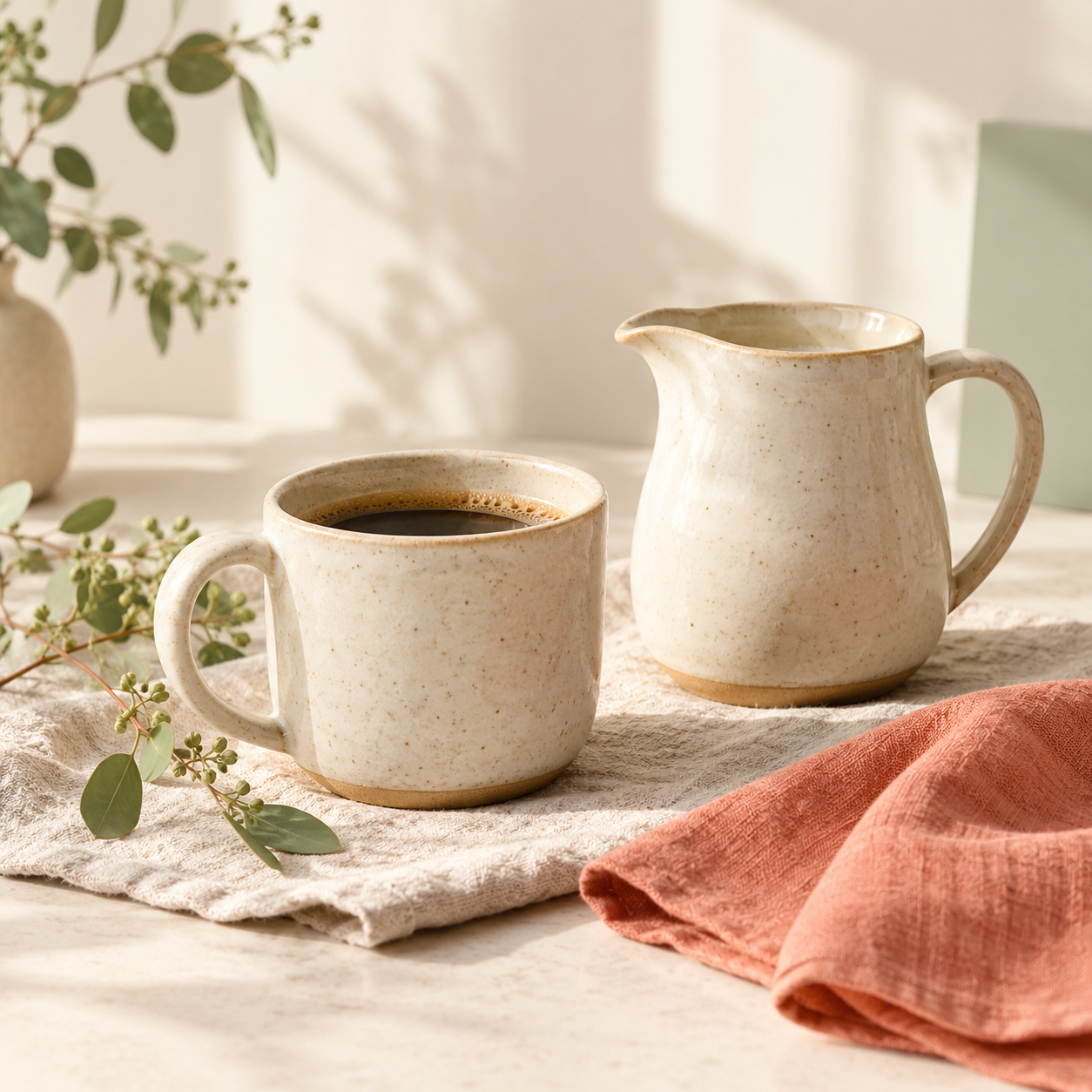
Category images are illustrative, AI-created still lifes, not photographs of specific products for sale.