The most attractive notebook is not always the one you carry or open. Decide what the pages need to do: catch quick thoughts, hold a daily plan, support a sketch, or organize a longer project.
Choose a size for where it lives
A compact notebook is easier to carry but offers less space per page. A larger format works well on a desk, but may stay there. Measure the bag or shelf where it needs to fit.
Pick ruling that helps the task
Lined pages suit continuous writing. Dots offer a light structure for lists and diagrams. Plain pages leave the most freedom for drawing. There is no universally better choice; match the page to the task you repeat.
Check the binding and paper
Look for how the book opens, whether it stays open easily, and whether pages can be removed if that matters. Paper weight is useful context, but does not by itself guarantee that your favorite pen will behave well. Look for relevant writing examples.
Keep the first page simple
You do not need a perfect system before starting. Put the date on a page and write the next thing you need to remember. A notebook becomes useful through repetition, not through keeping it pristine.
The useful takeaway
The best notebook for you balances size, page style, and everyday convenience.
This guide offers general selection criteria. We have not tested every product in the retailer’s search results. Check the exact listing, manufacturer information, and returns terms before buying.
We may earn a commission when you shop through our links. As an Amazon Associate I earn from qualifying purchases. How we’re funded
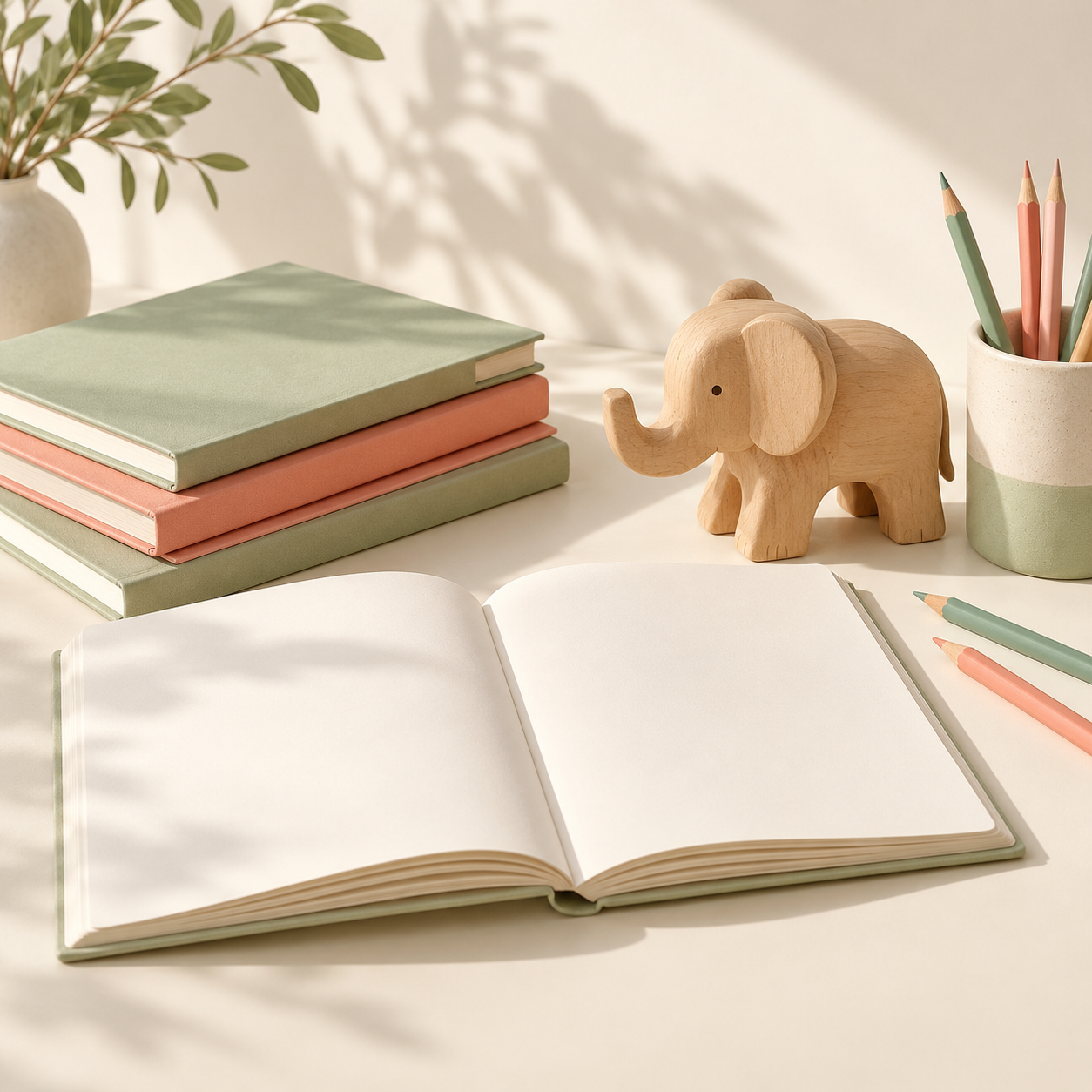
Category images are illustrative, AI-created still lifes, not photographs of specific products for sale.